
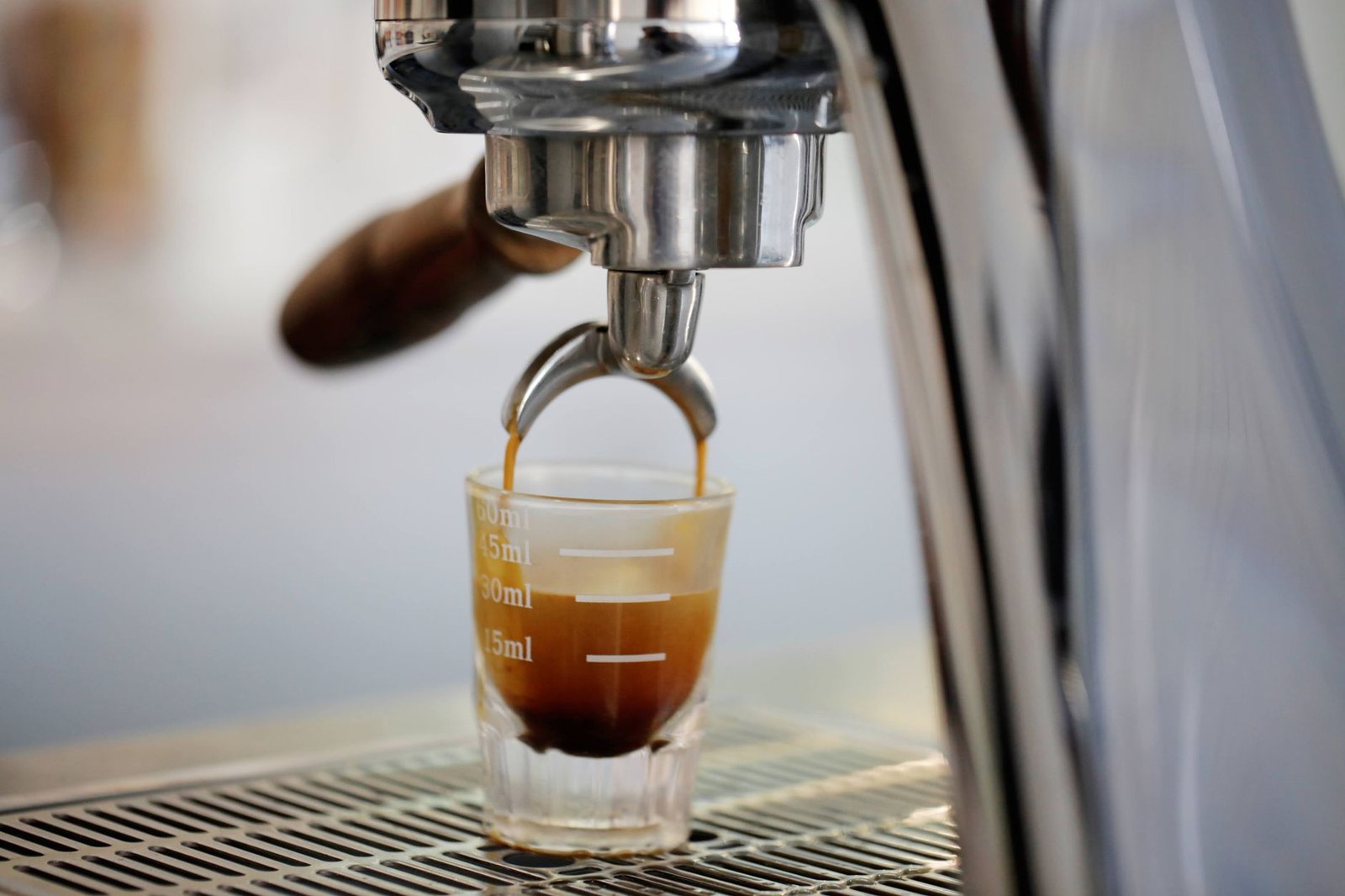
What Is Espresso Dialing?
At its core, espresso is a method of brewing coffee by forcing hot water through a compacted bed of finely ground coffee under controlled pressure. The result is a small, concentrated beverage with high solubility and intensity due to rapid extraction under pressure, typically around 6–9 bar in most modern machines.
The simplicity ends there. Terms like “fine grind,” “hot water,” and “pressure” conceal a large number of interacting variables that are difficult to stabilize in real-world conditions. Even small variations in grind distribution, temperature stability, or puck preparation can significantly affect extraction yield and flavor balance.
Espresso dialing is the process of systematically adjusting brewing variables—primarily grind size, dose, yield, and brew temperature—to achieve a balanced extraction. Pressure is generally fixed on most home and prosumer machines, meaning it is usually not a daily tuning parameter unless using lever machines or flow/pressure profiling equipment.
The process is part science and part sensory calibration. Even when using the same coffee, small changes in bean age, moisture content, and degassing can alter flow rate and extraction behavior over time. Freshly roasted coffee typically evolves significantly during its first 7–21 days post-roast.
The pursuit of the perfect shot is therefore less like solving a static equation and more like managing a moving system with changing inputs. Consistency comes from understanding the system, not memorizing a single “perfect” recipe.
The Core Variables in Espresso Extraction
The variables involved in espresso are interdependent, and changes to one often require compensatory adjustments to others. Understanding these relationships is central to dialing in consistently.
- Grind size: Controls particle surface area and flow resistance. Finer grinds increase resistance and typically slow extraction; coarser grinds increase flow rate.
- Dose: The mass of dry coffee in the basket. Higher doses increase puck depth and hydraulic resistance, affecting flow dynamics and extraction uniformity.
- Yield: The mass of brewed espresso output. Yield determines brew ratio (e.g., 1:2) and has a direct impact on strength and extraction yield.
- Water temperature: Typically 90–96°C for espresso. Higher temperatures increase extraction efficiency; lower temperatures reduce extraction and can emphasize acidity.
- Pressure: In most machines, pump pressure is fixed (commonly ~9 bar at the pump, though actual puck pressure varies). It is generally not adjusted during daily dialing unless using profiling equipment.
- Time: A dependent variable resulting from the interaction of all other parameters. It is not independently set in most cases but used as a diagnostic output.
These variables interact dynamically. For example, a finer grind increases resistance, which may increase shot time and extraction yield if other variables remain constant. As a result, espresso dialing is fundamentally an iterative process rather than a linear one.
Even under stable conditions, factors such as humidity, grinder retention, and bean degassing can subtly affect flow behavior, meaning the system is never perfectly static.
Reading Your Shot: Under-Extraction vs. Over-Extraction
A common starting point is a reference recipe—often around a 1:2 brew ratio (e.g., 18g in, 36g out), though modern espresso includes a wide range of ratios depending on roast style and extraction goals. Typical shot times vary widely, but many standard recipes fall roughly between 25–35 seconds, depending on grind and machine setup.
If the Shot Tastes Sour or Sharp
This is often associated with under-extraction, meaning insufficient soluble material has been dissolved from the coffee. Common causes include too coarse a grind, too low a temperature, too short a contact time, or uneven extraction due to channeling.
A first corrective step is usually to grind finer, increasing resistance and extending extraction time. However, if channeling is present, grind adjustments alone may not resolve the issue.
If the Shot Tastes Bitter or Dry
Bitterness is often associated with over-extraction, where excessive or less desirable compounds have been extracted. Contributing factors can include too fine a grind, excessive temperature, overly long contact time, or dark roast development.
A common correction is to grind slightly coarser or reduce brew temperature or yield. However, roast profile plays a significant role—darker roasts inherently extract more easily and may taste bitter even when technically well-extracted.
In practice, extraction balance is assessed through taste rather than time alone, since identical shot times can produce very different flavor outcomes depending on grind distribution and machine characteristics.
A Practical Workflow for Dialing In Espresso
A structured starting workflow typically looks like this:
- Begin with a fixed dose (e.g., 18g) matched to basket capacity and aim for a 1:2 brew ratio as a baseline (e.g., 36g out).
- Start with a medium roast coffee and an initial grind setting designed to produce a shot in the general range of 25–35 seconds.
- Evaluate flavor balance rather than relying solely on timing: acidity, sweetness, and bitterness should be assessed together.
- If the shot is under-extracted (sour, thin, sharp), adjust finer to increase resistance and extraction.
- If the shot is over-extracted (bitter, dry, astringent), adjust coarser or consider reducing temperature or yield.
- Make only one variable adjustment at a time to isolate its effect.
Core principle: change one variable per shot. Adjusting multiple parameters simultaneously makes it impossible to attribute changes in flavor or extraction behavior to a specific cause, significantly slowing the dialing process.
What Crema Actually Tells You
Crema is a layer of emulsified oils, microbubbles, and CO₂ released during extraction. It is strongly influenced by coffee freshness, roast level, and gas content, and is most prominent in freshly roasted coffee.
While crema can provide general clues—such as freshness or extraction consistency—it is not a reliable standalone indicator of extraction quality. For example, darker roasts naturally produce thicker crema regardless of extraction quality, and robusta blends produce more crema than arabica-dominant coffees.
Crema is best treated as a secondary visual indicator. It can support diagnosis, but it cannot reliably determine whether a shot is under- or over-extracted on its own.
The Honest Truth About Waste in Espresso Dialing
Espresso dialing inevitably produces imperfect shots, especially when working with new beans or changing environmental conditions. These shots are part of the calibration process and reflect iterative learning rather than failure.
Each adjustment is effectively a controlled experiment. Until variables stabilize, some shots will be under-extracted or over-extracted as the system converges toward a balanced recipe.
The Reward: When Espresso Becomes a Tasting Experience
When dialing is successful, espresso reveals a high degree of clarity and complexity. Well-extracted shots can emphasize sweetness, acidity balance, and texture in a way that is difficult to replicate in longer brew methods due to espresso’s high concentration and emulsification of oils.
Flavor notes such as chocolate, fruit acidity, or caramel-like sweetness are not inherent “additions” but perceived outcomes of soluble compounds extracted under controlled conditions.
The difference between an unbalanced and well-balanced shot is often significant, and sensory sensitivity tends to increase with experience, making inconsistencies more noticeable over time.
The Power of the Espresso Brew Log
A brew log is a structured record of brewing variables and sensory outcomes. It typically includes dose, yield, grind setting, extraction time, temperature (if adjustable), and tasting notes.
- Different coffees require different grind ranges due to variations in density, roast level, and processing method.
- Freshly roasted coffee evolves significantly during degassing, typically becoming more stable after the initial resting period (often 7–21 days depending on roast style).
- Environmental conditions such as humidity and temperature can affect grind behavior and flow rate, particularly in high-precision setups.
Over time, experienced users develop the ability to predict appropriate grind adjustments based on prior patterns, effectively internalizing the data recorded in their brew log.
Conclusion: Practice Over Perfection
Espresso dialing is best understood as an ongoing calibration process rather than a fixed problem with a single solution. The system is dynamic: beans age, environmental conditions shift, and equipment introduces small variations.
Rather than aiming for a permanent “perfect setting,” the goal is to develop the ability to quickly adapt to changing conditions and consistently converge toward balanced extraction.
While the process can be inconsistent at times, it becomes increasingly predictable with experience, turning espresso preparation into a repeatable skill rather than a trial-and-error exercise.
Leave a Reply