
The Uncomfortable Arithmetic of Coffee
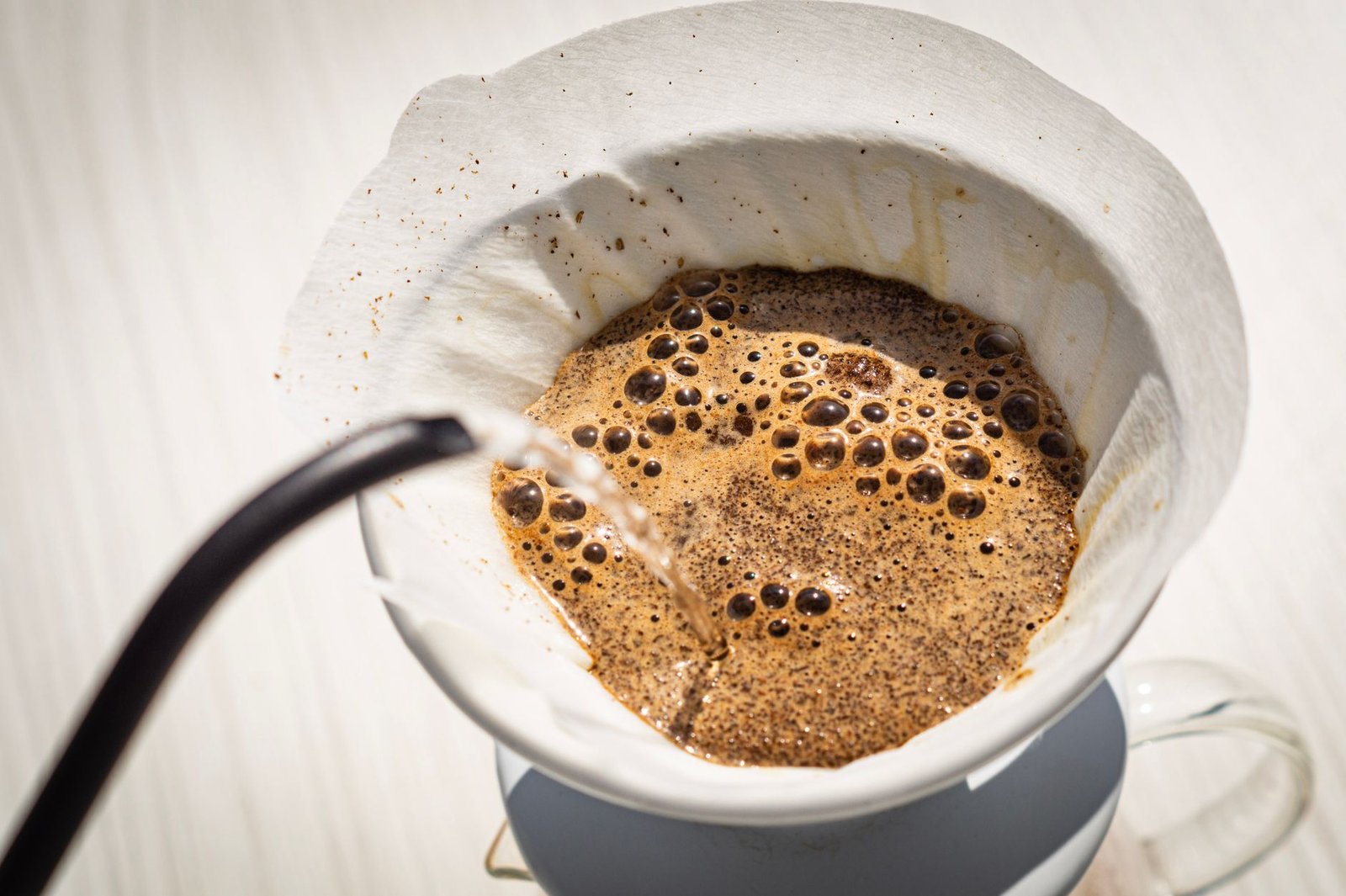
Brewed coffee is approximately 98% water by mass, depending on brew strength and extraction yield. This makes water the dominant component of the beverage. As a result, unsuitable water chemistry can significantly affect cup quality, regardless of bean quality or brewing precision. Excessively soft, hard, alkaline, or disinfectant-affected water can alter extraction efficiency and flavour balance. In chemical terms, water acts as both the solvent and a reactive medium, influencing which soluble compounds are extracted and in what proportions.
Why Distilled Water Is Not the Answer
Water purity alone is not sufficient for optimal brewing. Distilled and deionised water contain minimal dissolved ions and therefore lack hardness and alkalinity. While they can extract soluble coffee compounds, they often produce cups that are perceived as thin, underdeveloped, or lacking structure.
From a chemistry perspective, dissolved minerals—particularly calcium, magnesium, and bicarbonate species—contribute to extraction dynamics and buffering capacity. Without them, extraction can become less balanced, and acidity may appear unstructured. Additionally, very low-mineral water may fall outside manufacturer specifications for espresso equipment, where some mineral content is typically required to reduce corrosion risk and maintain stable operation.
Minerals in brewing water are therefore not merely contaminants; within appropriate ranges, they are functional contributors to extraction chemistry and sensory balance.
The Trouble with Straight Tap Water
Tap water composition varies widely by region and treatment method. It may contain elevated levels of calcium and magnesium hardness, bicarbonate alkalinity, or residual disinfectants such as chlorine or chloramine. These parameters can influence both flavour and extraction performance.
Hardness and alkalinity affect extraction efficiency and buffering, while chlorine compounds can introduce perceptible off-flavours at very low concentrations. In addition, high mineral content contributes to scale formation—primarily calcium carbonate deposits—which accumulate in kettles and espresso machines. Scale formation reduces thermal efficiency, can restrict flow paths, and may impair temperature stability over time.
The key variable is not simply hardness or alkalinity in isolation, but the overall balance between dissolved minerals, buffering capacity, and total ionic content.
The Two Minerals That Actually Matter: Magnesium and Calcium
In coffee brewing water, calcium and magnesium are the primary contributors to hardness, and bicarbonates contribute to alkalinity. These parameters influence extraction chemistry and sensory perception in distinct ways.
- Calcium contributes to general hardness and can support perceived body and structure in the cup. At higher concentrations, it increases scale risk and may suppress clarity.
- Magnesium tends to be more strongly associated with extraction efficiency of certain coffee solubles and may enhance perceived brightness and flavour definition, though effects depend on the full water profile.
Alkalinity (primarily bicarbonate content) acts as a buffering system, moderating perceived acidity. Low alkalinity can result in sharp or overly bright acidity, while excessive alkalinity can suppress acidity and reduce flavour separation.
What the Specialty Coffee Association Recommends
The Specialty Coffee Association (SCA) publishes reference water standards intended to optimise extraction and sensory balance. These guidelines typically include a target total dissolved solids (TDS) value around 150 mg/L, with an acceptable range of approximately 75–250 mg/L.
Additional parameters include near-neutral pH, moderate hardness (calcium and magnesium), controlled alkalinity, absence of detectable chlorine, and low sodium levels. These ranges are not strict requirements but empirically derived targets based on sensory and brewing consistency outcomes.
Municipal water supplies vary considerably relative to these benchmarks. Even small deviations in hardness, alkalinity, or disinfectant levels can produce noticeable differences in flavour, particularly in lightly roasted coffees where origin characteristics are more pronounced.
Why a Brita Pitcher Is Not Enough
Common activated carbon pitcher filters, such as Brita-style systems, are effective at reducing chlorine taste and odour and may partially reduce certain dissolved impurities. Some cartridges also modestly reduce hardness through ion exchange.
However, these systems do not provide precise control over calcium-to-magnesium ratios, alkalinity, or total dissolved solids. As a result, they may improve water quality perceptually but do not reliably produce a controlled brewing water profile aligned with specialty coffee standards.
The Easy Fix: Mineral Packets for Coffee
One practical approach is the use of pre-formulated mineral packets designed for brewing water, such as Third Wave Water or similar products. These are added to distilled or reverse-osmosis water to create a consistent mineral profile.
- They provide repeatable mineral composition when used with the correct base water volume.
- They reduce variability compared with untreated tap water.
- They simplify achieving a target hardness and alkalinity range.
While not chemically bespoke, these solutions approximate established brewing water profiles and can significantly improve consistency where local tap water is suboptimal.
The Custom Route: Building Brewing Water from Scratch
Advanced water preparation involves starting with low-mineral water (distilled or reverse osmosis) and reintroducing specific ions using measured mineral salts. Common inputs include magnesium sulfate (Epsom salt), calcium chloride, and bicarbonate sources to adjust alkalinity.
This approach allows precise control over hardness, alkalinity, and ionic balance. However, outcomes depend on the complete ionic profile, including sulfate and chloride ratios, and their interaction with specific coffee compounds.
While magnesium and calcium both contribute to extraction chemistry, their effects are context-dependent rather than absolute. The overall water composition, rather than any single ion, determines sensory outcome.
Matching Water to Roast Level
Water composition can interact differently with roast development level.
- Light roasts typically retain higher acidity and more origin character. These coffees often benefit from water with moderate hardness and restrained alkalinity to preserve clarity without excessive sharpness.
- Dark roasts exhibit lower acidity and more roast-derived compounds. These may benefit from water that supports body and smoothness while avoiding excessive hardness or buffering that could mute sweetness.
The optimal profile depends on the interaction between water chemistry, roast level, and extraction parameters such as grind size and brew ratio. Water is one variable within a broader system rather than an isolated determinant.
The Sodium Problem: Avoid Softened Water
Ion-exchange water softeners typically replace calcium and magnesium ions with sodium (or sometimes potassium) ions. While this reduces scale formation, it also removes hardness minerals that contribute to coffee extraction chemistry.
Elevated sodium levels can also negatively affect flavour perception, producing a flatter or occasionally slightly saline cup. For this reason, softened water is generally unsuitable for brewing unless further treated or blended with appropriately remineralised water.
The Side-by-Side Test: Proof in the Cup
A controlled comparison is one of the most reliable ways to evaluate water effects. Brewing identical coffee using identical parameters—dose, grind, temperature, and brew method—while varying only water composition can reveal significant sensory differences.
When tap water deviates substantially from recommended brewing ranges, differences in clarity, sweetness, and balance are often perceptible. This is particularly evident in lightly roasted coffees, where subtle flavour compounds are more sensitive to extraction conditions.
Water quality is therefore a critical but often overlooked variable in coffee preparation. Once its impact is perceived, it becomes easier to identify when water is enhancing or limiting the expression of the coffee.
The Investment Is Small, the Difference Is Large
Coffee is a chemically complex extraction system in which water plays a central role. Its mineral content, alkalinity, and residual treatment compounds influence extraction efficiency and flavour development.
Improving water quality does not require specialised equipment or advanced chemistry knowledge. In many cases, using remineralised low-mineral water or appropriately filtered tap water can produce measurable improvements in cup clarity and balance.
Once water chemistry is optimised, coffees often express more of their inherent sweetness, acidity, and aromatic complexity. Conversely, returning to suboptimal water can make these differences immediately apparent, underscoring the role of water as a foundational brewing variable.
Leave a Reply