
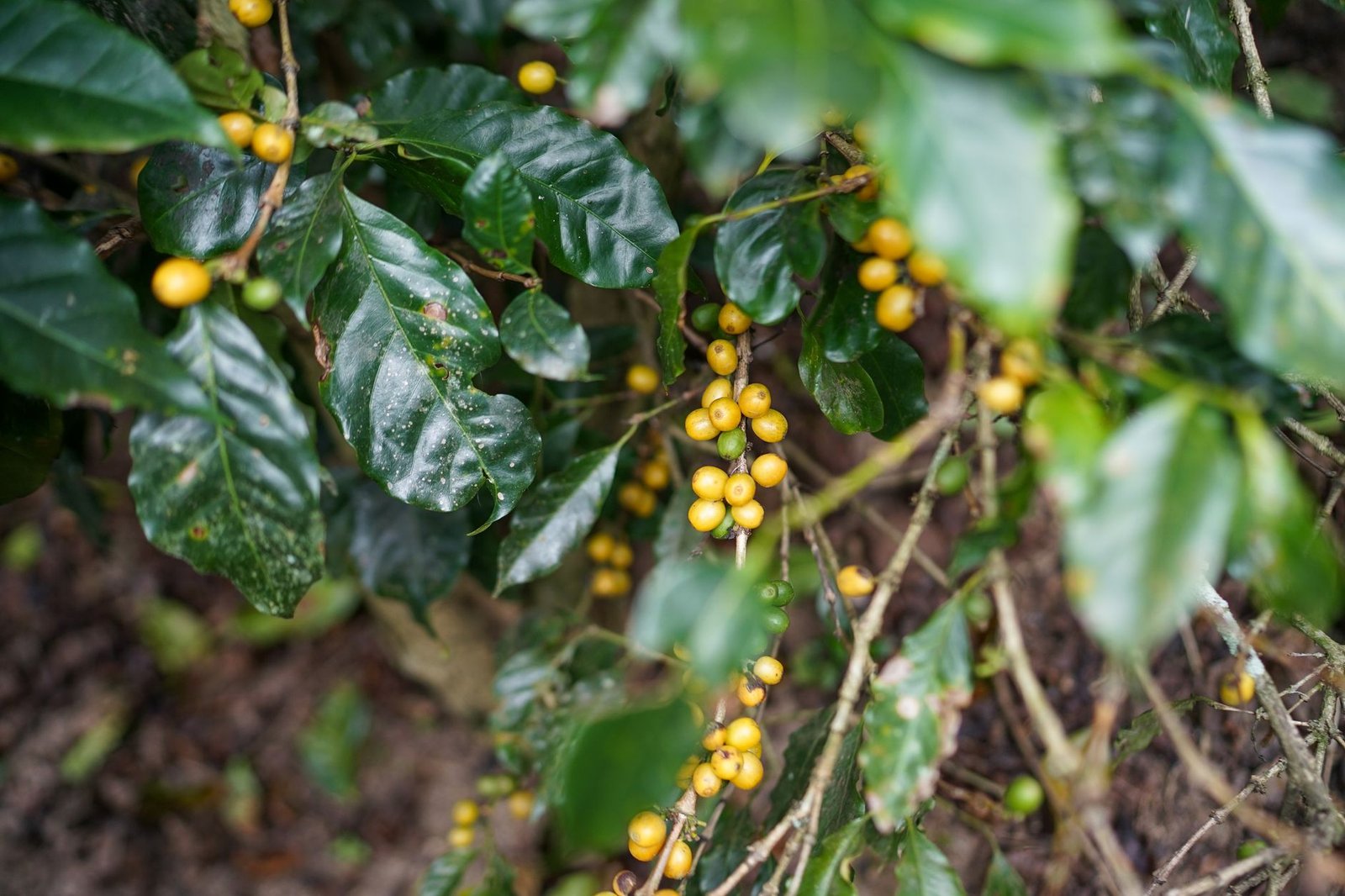
What Is Coffee Terroir?
Terroir is a concept borrowed from agriculture to describe how the specific conditions of a place shape the character of what grows there. Coffee has its own version of the idea, and it draws from a familiar set of factors: elevation, soil composition, rainfall patterns, temperature range, sun exposure, plant variety, and farm management.
The combination of these elements can be highly specific to a given patch of land, so two farms separated by a mountain ridge may produce coffees with noticeably different sensory profiles. The coffee plant is sensitive to its growing conditions, and those conditions influence the chemistry of the cherry and seed. Some of that chemistry carries through harvesting, processing, roasting, and brewing into the final cup. Roasters can emphasize, soften, or obscure certain qualities, but they generally work with the raw material rather than replacing its identity completely.
Ethiopian, Colombian, Guatemalan, Kenyan — the place a coffee grew can leave a meaningful imprint on flavor. Origin is only part of the story, however. Variety, processing method, and roast profile can influence flavor just as strongly, and in some cases more strongly, than geography alone. Roasting, blending, and marketing can shape how those characteristics are presented, but they do not completely erase the agricultural story behind the bean.
Ethiopian Coffee: The Fruit-Forward Classic
Ethiopia is where many origin-curious drinkers begin their journey, and there are good reasons for that. Many Ethiopian coffees, especially those from well-known highland growing regions, can arrive in the cup bright, aromatic, and fruit-forward, sometimes with floral or berry-like notes.
The natural processing method, in which the coffee cherry is dried whole with the fruit still surrounding the seed, keeps the seed in close contact with the fruit during drying and microbial fermentation. Rather than simply filling the bean with fruit sugars, that extended contact and microbial activity can influence the aromas and flavors that end up in the cup.
The result is a beverage that can suggest blueberry, strawberry, citrus, jasmine, or stone fruit, depending on the variety, region, processing, roast, and brew method. Those flavors can surprise anyone who learned as a child that coffee was simply a bitter brown liquid for grown-ups. The best examples are intense, layered, and occasionally a little alarming to people whose coffee experience has been limited to the contents of large institutional carafes.
Central American Coffee: The Comfort-Food End of the Spectrum
Central American coffees, hailing from countries such as Guatemala, Honduras, El Salvador, Nicaragua, Panama, and Costa Rica, often lean in a different direction. Traditional washed coffees from these origins frequently display notes of chocolate, nuts, caramel, brown sugar, citrus, or orchard fruit, with acidity that can feel balanced and approachable rather than sharply dominant. That said, modern processing methods can produce much fruitier and more unconventional flavor profiles than these broad regional descriptions might suggest.
It is worth remembering that processing method can be as important as origin when it comes to flavor. A naturally processed coffee and a washed coffee from the same farm may taste dramatically different. In some cases, two coffees from the same origin processed differently can be more distinct from one another than coffees grown in different countries but processed in similar ways.
They are approachable, friendly, and complex in the way that a good mystery novel is complex — the story unfolds without ever requiring the reader to consult a glossary. These coffees are often used in espresso blends, prized for providing sweetness, structure, and balance that can hold up well with milk. Without coffees of this style, the espresso landscape would be a far more chaotic place.
Kenyan Coffee: A Category of One
Kenyan coffees are often difficult to categorize as simply fruit-forward or chocolatey. They tend to be vivid and structured, with dark-fruit notes, pronounced acidity, and, in some examples, distinctive blackcurrant, grapefruit, or tomato-like qualities. Those characteristics are shaped by factors including high-elevation growing areas, varieties such as SL28 and SL34, and processing methods commonly used in Kenya.
Some drinkers fall in love instantly, while others take one sip and begin composing strongly worded letters to whoever recommended the bag. The polarizing nature of Kenyan coffee is, in a strange way, one of its selling points. A coffee that splits the room is at least a coffee that gets noticed, and a cup that gets noticed is doing something most beverages never manage.
What Drives the Flavor Differences? The Role of Altitude
The question of what actually drives these flavor differences is a worthy one to consider, because the answer involves some genuinely interesting agricultural science. Elevation often plays an important role, especially for arabica coffee. Coffee grown at higher elevations usually experiences cooler average temperatures and larger day-night temperature swings, which can slow cherry maturation. Slower maturation is often associated with denser seeds and a different balance of sugars, organic acids, and aromatic precursors.
The result is often a denser seed with a different balance of sugars, organic acids, and aromatic precursors, characteristics that may contribute to greater perceived complexity in the cup. Lower-elevation coffee may mature more quickly and may produce less dense seeds, although variety, farming quality, processing, local climate, and roast style can complicate that tidy rule. This is not to say it cannot be delicious, but rather that elevation is only one of the many forces shaping what ends up in the cup. Arabica coffee generally performs best in cooler highland environments, though exceptional coffees can be produced across a wide range of growing conditions.
Shade-Grown Coffee: Complexity and Stewardship
Shade-grown coffee adds another layer of complexity to this picture. Coffees grown under a canopy of trees, rather than in full sun, are often associated with slower plant growth and cherry maturation. Under good growing conditions, that slower development may contribute to cup complexity, although the relationship is not automatic.
Shade alone is not a magic spell; variety, soil, farm management, processing, and roasting still matter enormously. Canopy trees can also provide habitat for birds and insects, support biodiversity, reduce erosion, moderate temperatures, and contribute organic matter to the soil. In some systems, this can support biological pest control and reduce reliance on certain chemical inputs, although outcomes depend on how the farm is managed. Shade-grown coffee is therefore often framed not just as a potential flavor benefit but also as a form of environmental stewardship. Thoughtful land management and good flavor can go hand in hand, but neither should be assumed from a label alone.
A Simple Exercise: The Side-by-Side Tasting
For anyone who wants to experience the difference that origin makes without enrolling in agricultural school, there is a beautifully simple exercise available. Find two light or medium-light roasts from different countries and brew them side by side using the same recipe, grind size, water, and brew method. The contrast can be genuinely striking, the kind of revelation that makes a person wonder how they ever thought all coffee tasted the same.
A light roast Ethiopian might present itself with notes of jasmine and lemon, bright and aromatic, almost like drinking a flower that has been turned into a beverage. A light roast Peruvian, by contrast, might show notes of brown sugar, cocoa, nuts, gentle citrus, or soft stone fruit, depending on the region, variety, and processing method. These can feel like very different beverages, even though both began as seeds inside coffee cherries grown in tropical or subtropical coffee-producing regions.
The exercise works with any pairing, but the more different the origins, the more dramatic the comparison can be. A Kenyan and a Honduran side by side may deliver a flavor whiplash that no amount of careful description can fully prepare a drinker for. A Guatemalan and a Colombian, both Latin American origins with some overlapping highland growing conditions, may offer a subtler conversation between the cups, though the result still depends on region, variety, processing, roast, and farm conditions.
Either way, the lesson is much the same: the label on the bag is often a useful hint at a different sensory experience. The only real risk is that the drinker ends up with two open bags, a steaming mug in each hand, and a sudden inability to choose.
The Sense of Place in a Cup of Coffee
What makes origin-focused coffee so compelling is that it reintroduces something that many modern food and drink products downplay: a sense of place. A bottle of soda is designed to taste consistent across locations; a bag of chips is usually formulated for predictable flavor regardless of where the factory happens to sit. Specialty coffee, in particular, is difficult to detach from its agricultural identity.
The climate it grew in, the elevation of the farm, the farmer who chose a particular variety and tended the plant for years before the cherry was ever picked, the processing method used after harvest, and even the roasting decisions made later — all of these contribute to the cup’s story.
This is the part of specialty coffee that tends to convert skeptics. People who have spent decades treating coffee as a delivery mechanism for caffeine often find themselves unexpectedly moved when they realize that the cup in their hand is the end product of a chain of decisions and conditions stretching back years and across continents. There is a farmer who decided to grow coffee instead of something else. There is a hillside or mountain that shaped the microclimate. There is a rainy season that influenced flowering and harvest. There is a roaster who chose a profile designed to highlight what was already in the bean rather than to mask it. None of this needs to be exaggerated in the marketing copy, but all of it can be part of the story, and attentive drinkers will eventually start to notice.
How to Start Your Own Coffee Origin Journey
The world of coffee origins is deep, sometimes absurdly deep, and there is always another country, another region, another farm to explore. Each origin is its own rabbit hole, and the rabbit holes are interconnected, which is to say the rabbit hole is really more of a rabbit warren. Anyone who falls into it is unlikely to climb back out unchanged.
The good news, for those considering starting their own origin journey, is that finding a coffee that resonates is not particularly difficult. In many markets, the variety of specialty coffee available today is broader and easier to access than it was even a decade ago. Specialty-focused coffee shops are more common than they once were, and many offer flights, sample bags, or rotating small batches that allow curious drinkers to sample widely without committing to a full-size bag.
Tips for Exploring Single-Origin Coffee
- Read the small print on the bag. That origin label is usually more than just a piece of trivia; it is often a hint about what is in the cup.
- Try tasting flights at local coffee shops. Many specialty roasters offer small samples that let you compare regions without committing to a full bag.
- Start with contrasting origins. Pairing an Ethiopian with a Central American coffee, or a Kenyan with a Honduran, makes the differences easier to notice.
- Keep notes. Developing a vocabulary for the flavors you taste is part of the reward.
Conclusion: The Bag Is Waiting
So the next time a bag of coffee is picked up, the small print on the side is worth reading. That origin label is often a hint about what is in the cup, and an invitation to compare, to taste, and to develop a vocabulary for flavors that might otherwise pass unnoticed.
Somewhere on the planet, there is likely a coffee farm, cooperative, or region whose beans will taste exactly right to you, and finding it is one of the more enjoyable quests available to anyone who owns a kettle. The bag is waiting, the origin is written on it, and the only thing left is to brew a cup and pay attention.

Leave a Reply